The Chinese New Year Parade
Written by Jamie Dean
Every year, Chicago’s Chinatown hosts a parade during the Lunar new year. Alive with extravagant floats, oriental ornamentation, and thousands of spectators, the chinatown streets showcase Chinese culture and traditions as well as many local Chicago businesses, schools, and organizations. On Sunday, February 2nd of 2020, some classmates and I went to see this event for ourselves.
On my way to school, I noticed that there were a lot more Asian Americans and people of Asian descent on the Red Line than usual. Families and groups of friends got on together, sitting or standing in next to each other on the ride from Howard to Chinatown. Some people were speaking Mandarin, others were speaking English, and still others were speaking languages that I was not familiar with. A lot more young people than usual were also boarding the train along the way, and the train was much more crowded than usual to for a Sunday morning. When the train got to Cermak Chinatown, most of these people got off. I rode the train past this stop to get to school. I got off at Sox 35th station.

When I met up with my classmates, we all put on disposable medical masks that we’d brought for the parade. This was to lower our chances of coming in contact with the Corona Virus, which is currently plaguing China and already being found in Chicago. We wore these masks while taking the train and did not take them off until we left the parade. We took the Red Line from the Sox-35th station to Cermak Chinatown and I noticed that many others were also wearing masks to this event.
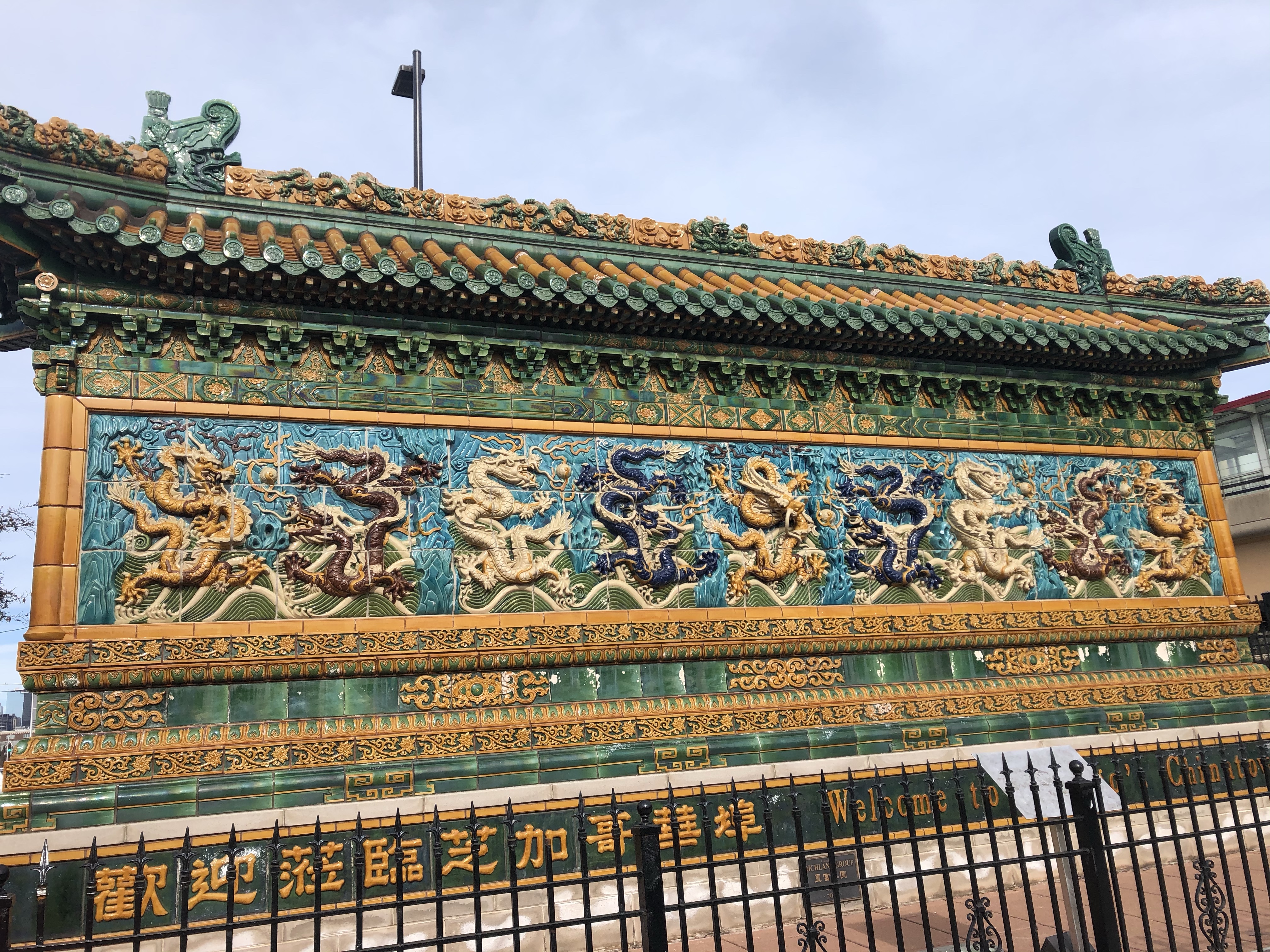
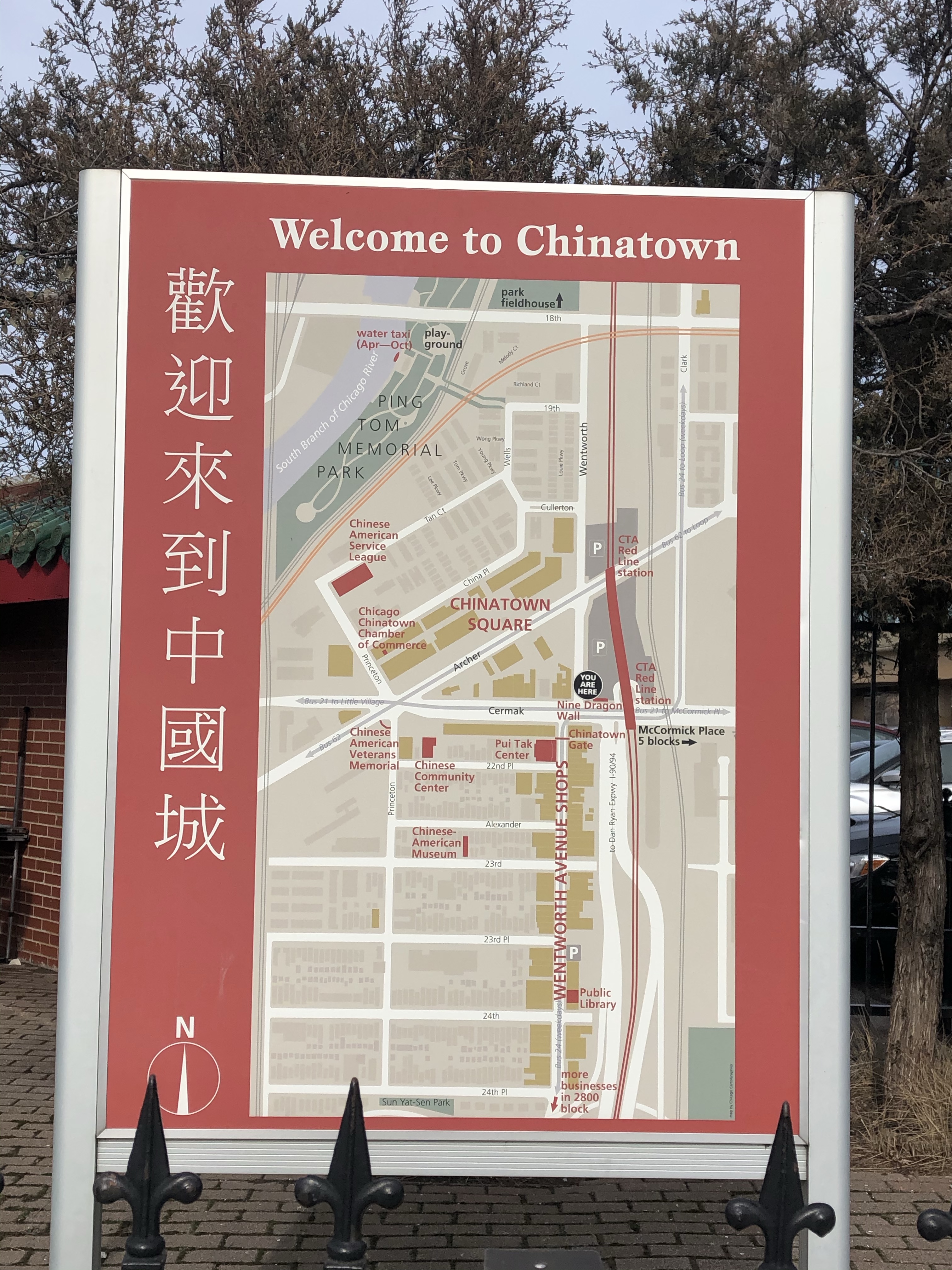
Upon arrival, we were met with a growing crowd of people. Most people were walking toward the start of the parade at 24th and Wentworth. On our way there, we stopped by the Chinatown map and the Nine Dragon Wall. The wall was green and gold, depicting a pattern of gold, brown, white, and blue dragons. Above the wall, there is a small ornamented roof with two carved dragon guardians. The bottom of the wall read in traditional Chinese characters: 雚迎蒞臨芝加哥華埠, with the English translation next to it, which says “Welcome to Chicago’s Chinatown”.
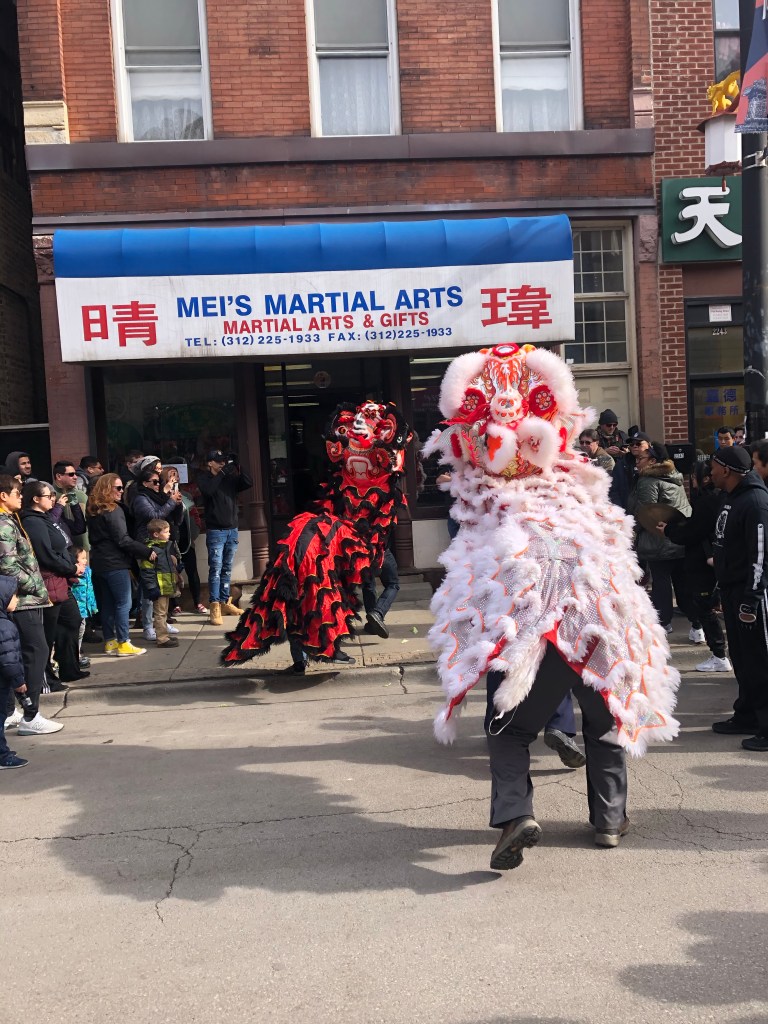
Once we arrived at the start of the parade, we still had 15 minutes to explore while we waited for it to start. We saw many small stores and hundreds of little red lanterns strung all across the street and over buildings. A little further down the block, a crowd of people was watching as a store called Mei’s Martial Arts put on a lion dance show. Each “lion” was made up of two dancers wearing matching pants and draping a lion costume over themselves. The person in the front holds the head and plays the front legs, while the person in the back bends over, holding on to their partner and plays the back legs. They move in stride with each other, and with the costume and realistic movements, they resemble a lion frolicking around to the sound of the drums.
We also went into a nearby store which sold many traditional Chinese garments such as children’s clothes and women’s quipaos. I had been to this store before while looking for a quipao for last year. The family that owns this store, a mother, father, and their daughter, lives in the nearby, and doesn’t just import products from china to sell; some of these items they make or adjust on their own. When we began taking pictures, we were told “no pictures, please”, so I only was able to get a few pictures, but the clothing here is very representative of traditional Chinese clothes.


Finally, we made our way back to the start of the parade with a few minutes to spare. There was a huge stage with balloons. Volunteers wore bright yellow safety vests and red sweatshirts that said “Dragon” and had an outline of a Chinese dragon. A stray dragon dance team was entertaining the croud as one volunteer set up rows of firecrackers on the ground. Spectators were told to stand back and stay out of the street. They lit the firecrackers and a huge pop of explosions went off, smoke and sparks filling the air. Once they died out, the crowd broke out cheering and the parade began!
Many vehicles, such as a CPD car, a firetruck, and an ambulance blared their sirens as they went through the parade. The American flag was marched through, accompanied by soldiers solemnly holding rifles. Then, Mickey and Minnie Mouse paraded past as well, waving. Many more vehicles and floats came through, including a military truck pulling an army tank, marching bands and step teams from multiple nearby high schools, many dragon and lion dances, dragon boats, people holding signs for peace and gay pride, children’s art groups, the Illinois Lottery, the US Census, and other cultural groups demonstrating their music, dances, or other aspects.


One of these that stood out to me the most was the float for the Taiwanese Benevolent Association of Chicago and the Taiwanese Economic and Cultural Office in Chicago, which are supervised by the Overseas Community Affairs Council in Taiwan. They are based in Westmont, IL, at a culture center that I grew up a part of. I recognized one of the costumes they had on board their float. This costume was called a San Tai Zi, and in the past, I had danced in that very costume for the Chicago Thanksgiving Parade.


The various showcases represented not only chinatown, but the surrounding communities and businesses that contribute to Chicago’s diversity. Overall, the Chinese New Year Parade was to celebrate more than just the Lunar New year; it celebrated the cultural diversity of Chicago as a community.
Once the parade was over, we went to Chinatown Square, a shopping center just a few blocks away from where the parade had been. The architecture showed many traditional colors and shapes used in traditional Chinese architecture and the signs had Chinese lettering next to the English words. Many of the stores were restaurants or gift shops, though some were barber shops, pharmacies, and banks. Lanterns were strung everywhere for the New Year and the architecture and signs made me feel like I was really in China. Finally, we visited the zodiac figures at the entrance to chinatown.


These were carved from stone and each showed an abstract statue of one of the zodiac animals, followed by the name, a description, and a list of years that the zodiac falls on.
Going to the Chinese New Year parade gave me a perspective of Chinatown that I wasn’t as familiar with, and it showed the influence of the community in how much Chinatown has been able to thrive over the years.
 Global Chicago