Chicago Today- A Global City
Written by Jamie Dean
Chicago, a globally recognized city that was no more than a muddy trading post just a few centuries ago, has a lot to offer. From its high ranking on global city scales to its diverse cultural experiences and neighborhoods, Chicago is like no other city. It consistently offers its own feel as well as its undeniable and undying influence in the world.
Part of the reason Chicago has such a renowned global status today is due to the high levels of talent in the city. Such levels of talent are reflected not only through the extensive career opportunities in STEM, business, and other fields that may improve Chicago’s global ranking, but also through its attractiveness to foreigners. This may be due to its international schools, cultural diversity, higher education, career opportunities, and even promises as a sanctuary city. Over the centuries, Chicago’s appeal has drawn new people in, not only from different parts of the United States, but also internationally.

Looking back on the city’s humble beginnings, this is comparable to, and can even be accredited to, the early innovation of mail order catalogs. Well before internet ads and social media, Chicago was one of the first cities to promote its products through mail and with a catalog that was shipped to people all over the country. This not only drastically improved business and caused more powerful people to invest in the city, but also spread ideas and images of Chicago’s best features and products to the general public, encouraging people to visit and make the city their home. Today, the city’s early utilization of mail order catalogs remains a building block of its current success, and that same entrepreneurial drive and concept of advertisement/outreach still helps to promote Chicago’s businesses and the city as a whole.

Chicago’s talent is partially due to quality higher education, outreach programs, and career opportunities, but is also due to the growing international population and number of international students. This is reflected not only by international schools and students, but also by the tremendous cultural diversity in the city. Dozens of neighborhoods make up the city, many of them home to strong cultural groups that are not only seen in their prospective neighborhoods, but also carry weight in Chicago’s schools, corporations, and politics. This semester, I travelled to and consciously observed three different neighborhoods with my Global Chicago class and, in doing so, had the opportunity to learn about some amazing cultures different than my own and how they play a role in the city. These neighborhoods included Chinatown, Bronzeville, and Pilsen, culturally diverse neighborhoods which were different in so many ways but all shared a common cultural background that brought them together-Chicago.
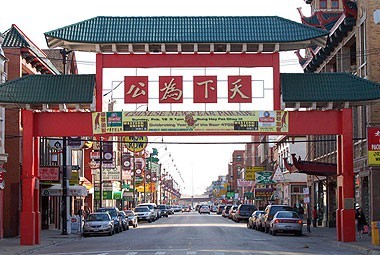
The first neighborhood I visited with my class was Chinatown. The colorful signage, decorations, elaborate storefronts, and beautiful Chinese new year parade the day we visited made my trip to Chinatown into a lasting memory. With all the Chinese culture and pride, however, came a similarly strong sense of community with the city. While oriental-style architecture and Chinese signage filled the streetview, so did Chicago flags, Chicago buildings, Chicago political yard signs, the Chicago skyline, and hundreds of Chicago’s people. Rather than a secluded cultural bubble or a completely westernized community, Chicago’s Chinatown is a culturally rich in-between; a Chinese-Chicagoan community that is part of both cultures. This can really be seen in my favorite part of Chinatown, Chinatown Square. Chinatown Square is a shopping mall that draws in hundreds of people from all around the city looking for something to eat, a place to take pictures, or just a new cultural experience. Not only does this bustling tourist destination attract Chicagoans, but it brings in international tourists, a large population of Asian immigrants, businesses and restaurants, and is even home to multiple international organizations. Because of this, Chinatown is able to make a contribution to Chicago’s status as a global city.

Bronzeville, the the destination of our second field trip, was also rich in culture and history, but a little bit less noticeably so. Bronzeville’s history and culture is showcased throughout the neighborhood by landmarks, plaques, monuments, statues, etc. rather than through signage in different languages or cultural decorations like Chinatown. However, its legacy and history speak for themselves. The center of African-American culture in Chicago and home to the Chicago Defender, legendary musicians, and civil rights advocates throughout history, Bronzeville brings unparalleled cultural contributions to the city. Its lively Chicago streets not only reflect Chicago’s culture but add to it. Furthermore, many landmarks and historical monuments around the neighborhood telling its story, which is one of my favorite qualities of the neighborhood. These nationally acknowledged monuments and historical landmarks represent a history of not just the city, but the entire country. Attractions such as the Great Migration Statue show a part of the country’s history, not just Chicago’s. Such landmarks can and already do influence Chicago’s influence on a national and global scale by bringing attention to its historical and cultural significance.

The last and for me most eye-opening neighborhood that we visited was Pilsen. Similar to Chinatown, Pilsen’s signage and store fronts reflected strong Mexican culture. Pilsen also had similarities to Bronzeville, such as the murals made for important people in the city’s past. Pilsen’s Wall of Honor, a mural to commemorate victims of murder and advocate for peace within the city reminds Chicago of its need for unity and togetherness. Not only are Pilsen’s murals aesthetically beautiful, they convey messages that never fail to invoke emotion while telling their story. Pilsen has so much to offer to the city and the world. Vibrant artwork around the neighborhood reflects the ambition and combined efforts of the Pilsen community. One of my favorite examples of the way Pilsen’s artistic light brightens the city can be seen in the National Museum of Mexican Art,
 Global Chicago