Known for its primarily Latino population, ethnic feel, and flourishing community, Pilsen, a neighborhood on Chicago’s West Side is not only home to many residents and families of Latin descent but also an attraction for tourists and sightseers every day. However, Pilsen was not always this way. A few generations ago, the streets, parks, and community buildings were bustling with a different ethnic majority, the Czech (or Bohemian) people. Eventually, due to many push-and-pull factors such as Mexicans being displaced from their homes in different neighborhoods for construction of schools and highways and Czech people moving to the suburbs, Latinos became the majority in Pilsen and it was transformed into the neighborhood we know today.
Last Friday, some classmates and I went to experience Pilsen for ourselves. Here is what we saw.
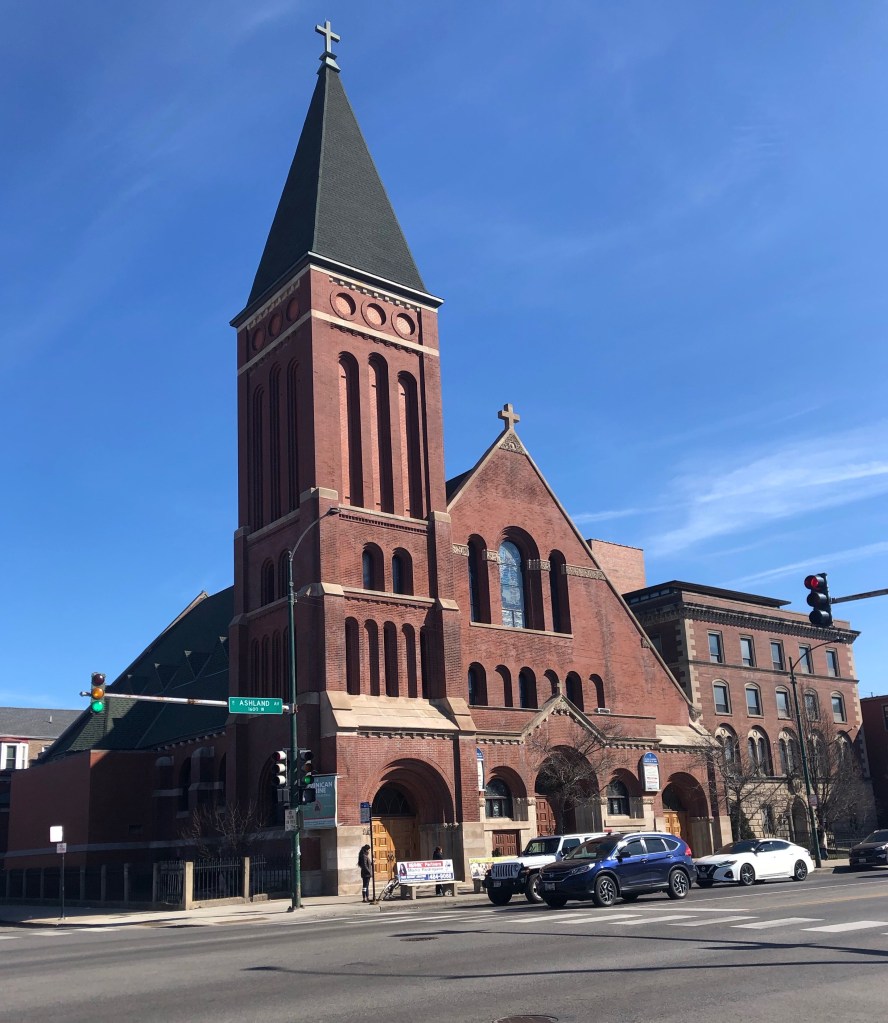
First, we drove from school to Ashland and 18th Pl to park. When we got out of the car and began walking, the first thing we saw was a beautiful church on the corner of Ashland and 19th. After some research, I learned this church is called the St. Pius V Catholic Church and was initially founded by Jesuit priests in a mission parish for Irish immigrants. Today, it is still a Catholic Church in honor of St. Pius V but now it serves Pilsen’s community, a primarily Latino ethnic group.
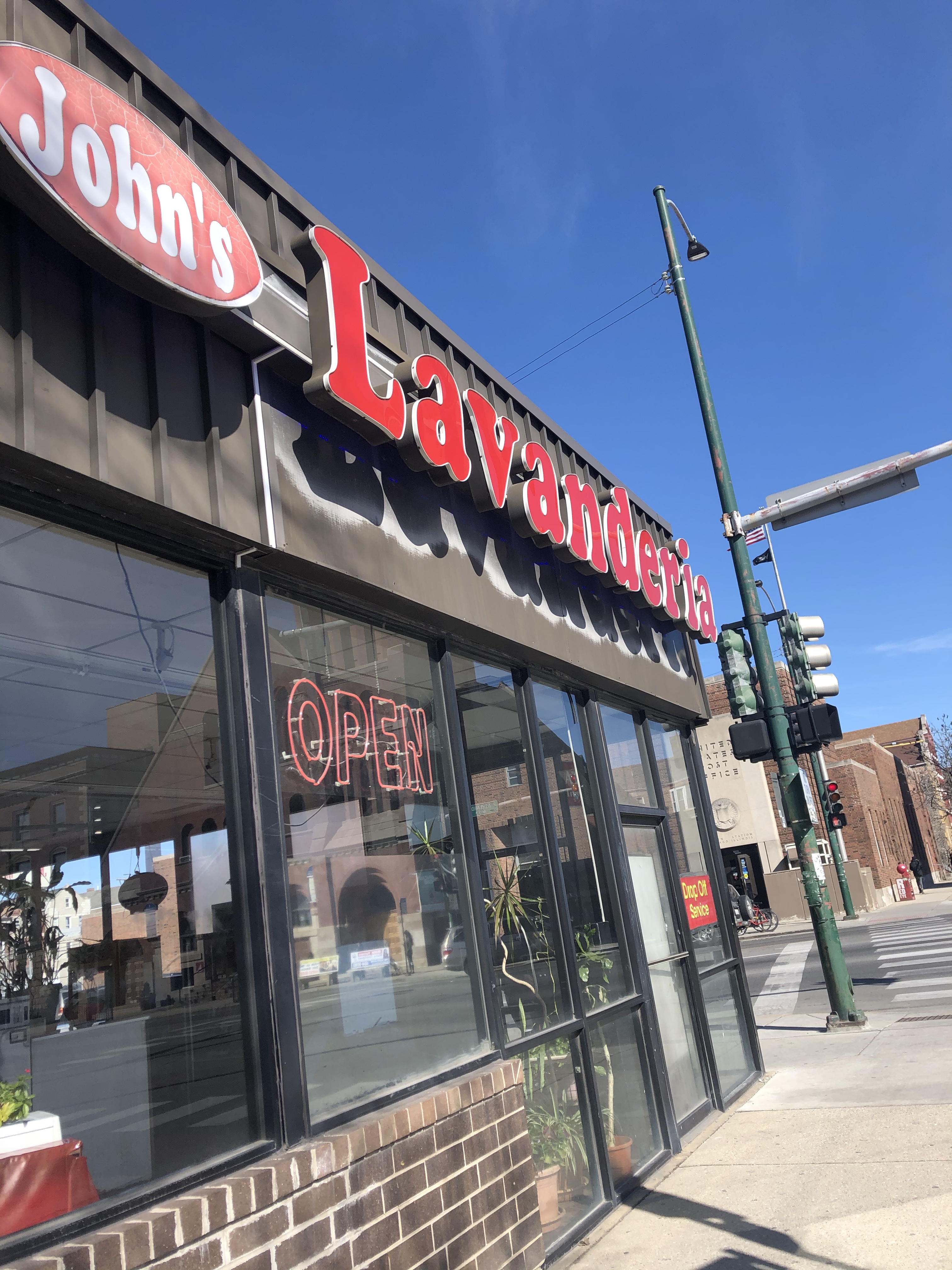
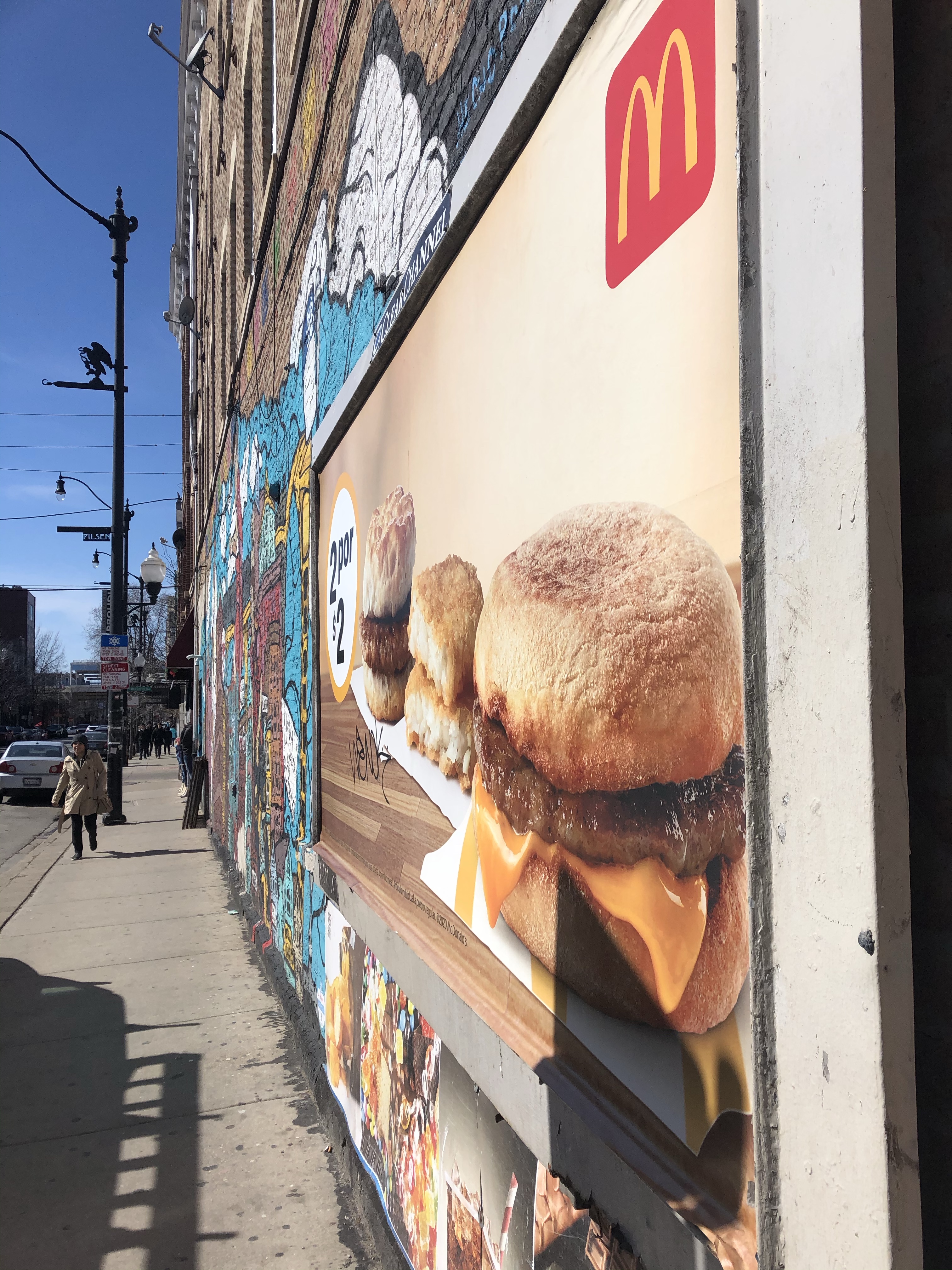
After this, we walked to 18th street and began heading West. To my amazement, the building and streets were decked with an array of colorful signs and murals, each one popping out with vibrant messages or advertisements. Many small businesses lined the streets, advertising ethnic foods and services. I noticed that many signs were in Spanish and English. Some were even just in Spanish with no English translation. I felt fully immersed in this powerfully ethnic setting. My classmates and I tried to pick out the meanings of some of the signs with our minimal knowledge of Spanish. Some of these signs that I recognized were Lavanderia (Laundromat), El Sabor de Mexico (The Flavor of Mexico) and a McDonald’s advertisement reading 2 por $2 (2 for 2$).
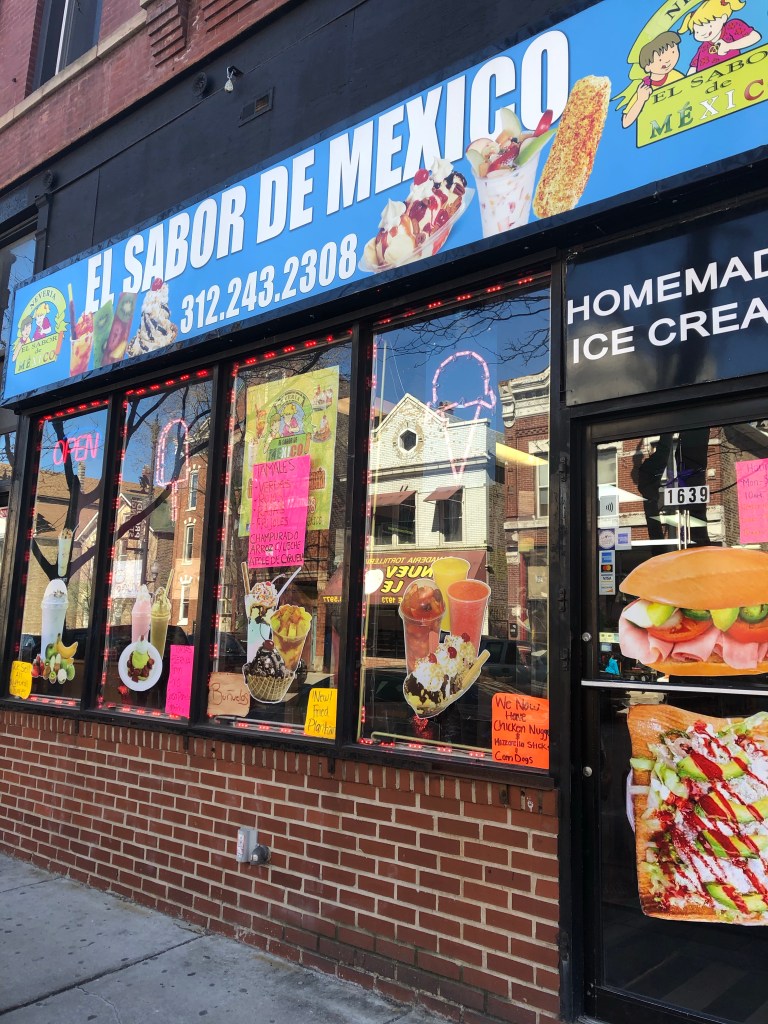
We decided to get ice cream at El Sabor de Mexico. The pictures just looked too delicious to pass up. As soon as we walked in, the walls stood out to me. If I had thought that the colorful signage outside on the street was attention-getting, this was even more so. Like typical American restaurants, the menus were placed on the walls above the counter. However, these menus were bright with close up images of the food sold there and a beautiful mess of handwritten English and Spanish descriptions of weekly specials and deals in colorful markers and papers taped onto the wall. It was like an in-store collage with endless options to choose from.
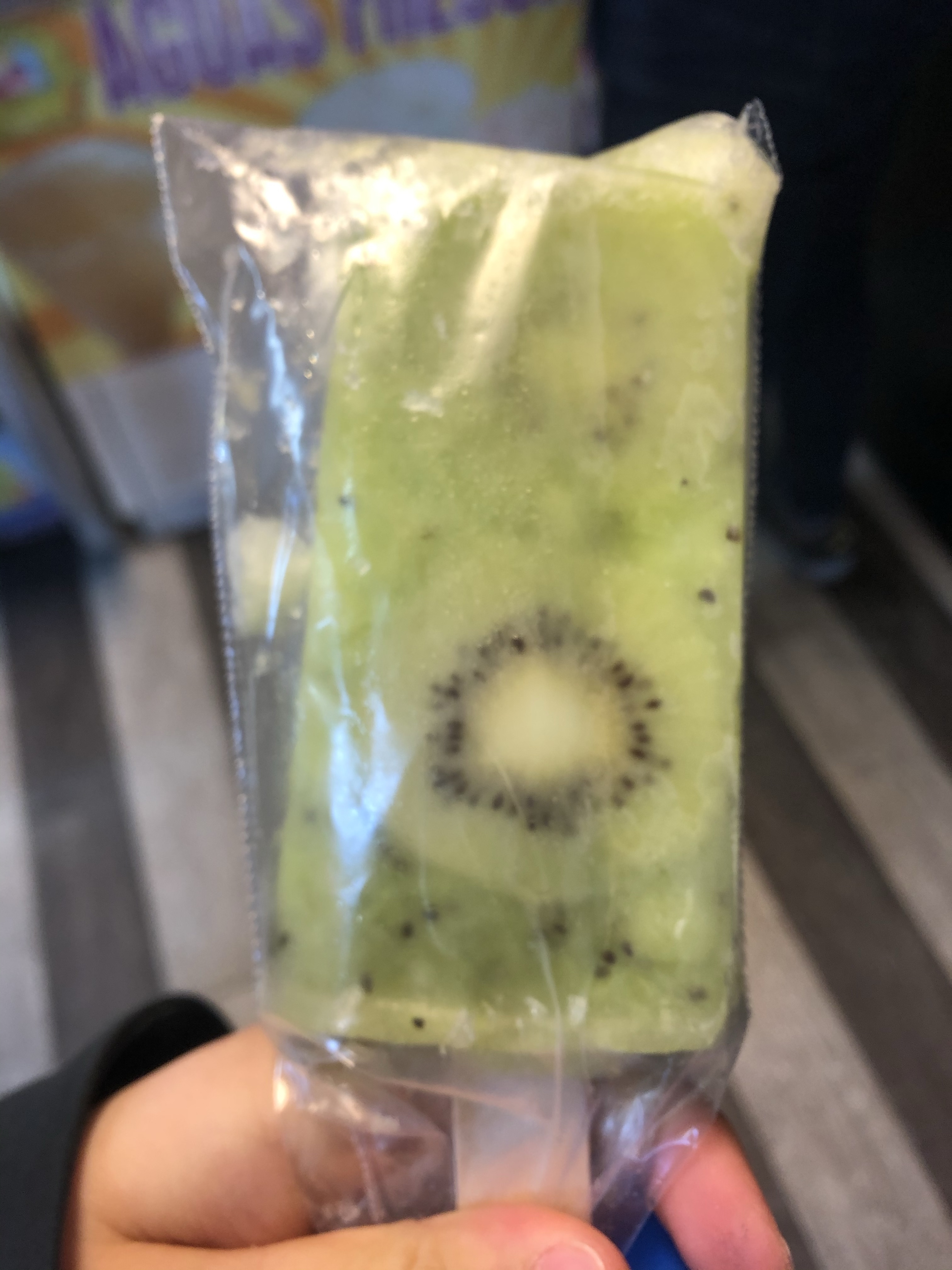
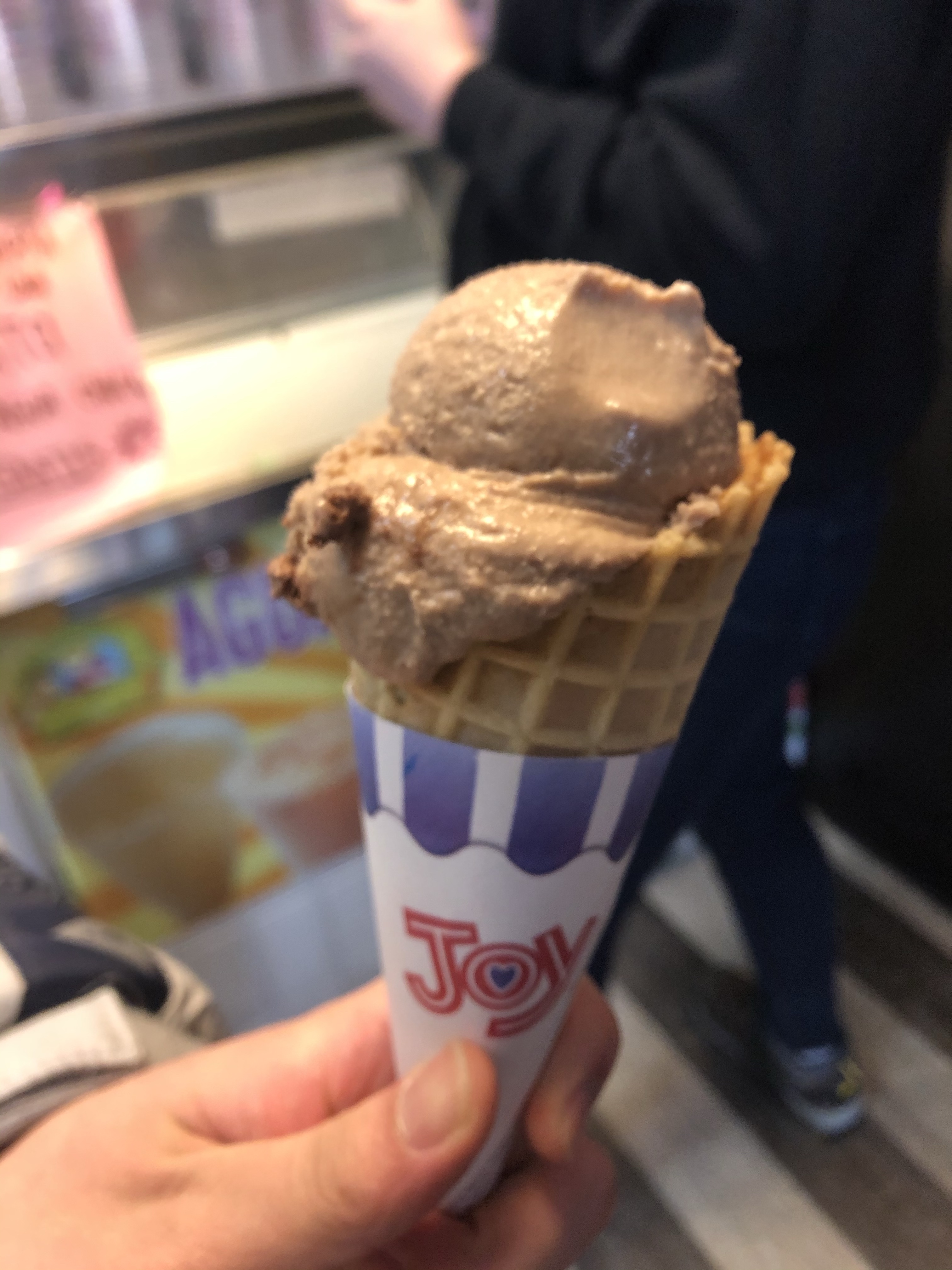
Many of the options intrigued me such as sweet fruit smoothies, Mexican pastries, and some crazy ice cream combos I never imagined possible. They even sold hot chips in the bag with added sauces such as nacho cheese, meats, and jalepeños. In an effort to eat healthy, I ended up ordering a kiwi popsicle with actual kiwi slices in it. My classmates ordered chocolate ice cream on a cone. After paying, we thanked the cashier and continued walking West on 18th street.
During our walk, we came across multiple inspiring displays of street art. Unlike some of the other neighborhoods we visited, the street art here had strong political and social messages and many murals, like the mural of Frida Kahlo across from the 18th street Pink Line Station and the mosaic murals on 18th street and Paulina, which gives tribute to many people of importance or historical figures. One of these included Jeff Maldonado Junior, a 19-year-old aspiring musician and artist who was shot and killed on the street in Pilsen due to gang violence. The mural is called the J-Def Peace Project and shows a hand from the sky in a fist. It says “Guns Down”. The mural next to his portrait says “create a safe place”. Next to this, there is the Pilsen Wall of Honor, honoring four people that have made made a positive impact on the neighborhood. Under each person is lyrics to a song by Jeff Jr.

Mural of Jeff Maldonado Junior 
This section of the wall reads: “Create Safe Places” and shows the silhouettes of children playing. 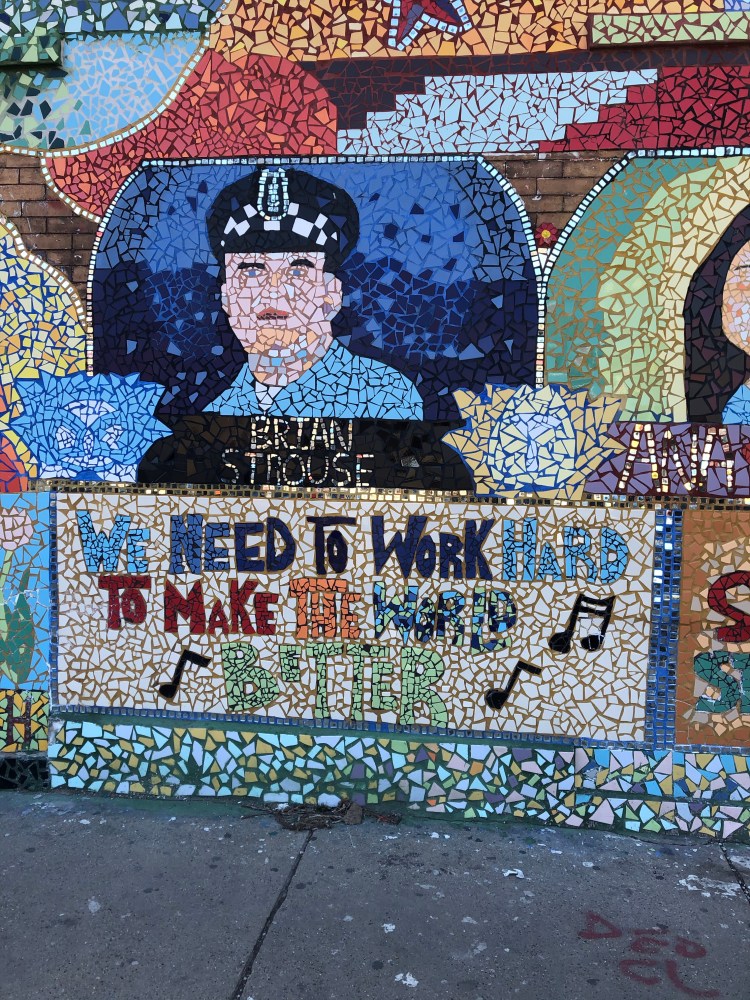
This section commemorates Brian Strouse, a police officer and military veteran killed due to gang violence. Source. The lyrics under his portrait say: “We need to work hard to make the world better” 
Ana Mateo, a 7-year old girl who was shot and killed in front of her home in Pilsen is honored in this mural. Source. The lyrics under her commemoration say: Stop killing each other start coming together” 
Here, Francisco Mendoza, an artist and teacher who left his mark on Pilsen, is commemorated alongside Francisco Javier Merino, a victim of homicide at age 19. Mendoza taught at Cooper Dual Language Academy and is the artist behind many murals in the city, such as the ones at Orozco Community Academy and the 18th Street Pink Line Station murals. Source Javier was a “fond barber and dear friend to many.” Source
The lyrics under these portraits say: “But the things you want in life like the cars and the bling”
The last line of the song on this mural says: “Got you blinded by the fact that it’s only a dream”. 
Here, the mural says “Make Smart Choices”. 
These murals on 19th street are four stories high and painted on the sides of buildings. They depict images of the Virgin of Guadalupe and the progression of Latin Americans over the generations: a family’s immigration overseas, workers of many simple low-skilled jobs, and then one reading “si, se puede” depicting Latin American skilled workers such as a businessman, a doctor, and a chef and a college graduation, signifying higher education and moving on to greater things. 
The art on this wall says “Cruzando Muros”, meaning crossing walls. This was next to someone’s house, in their yard.
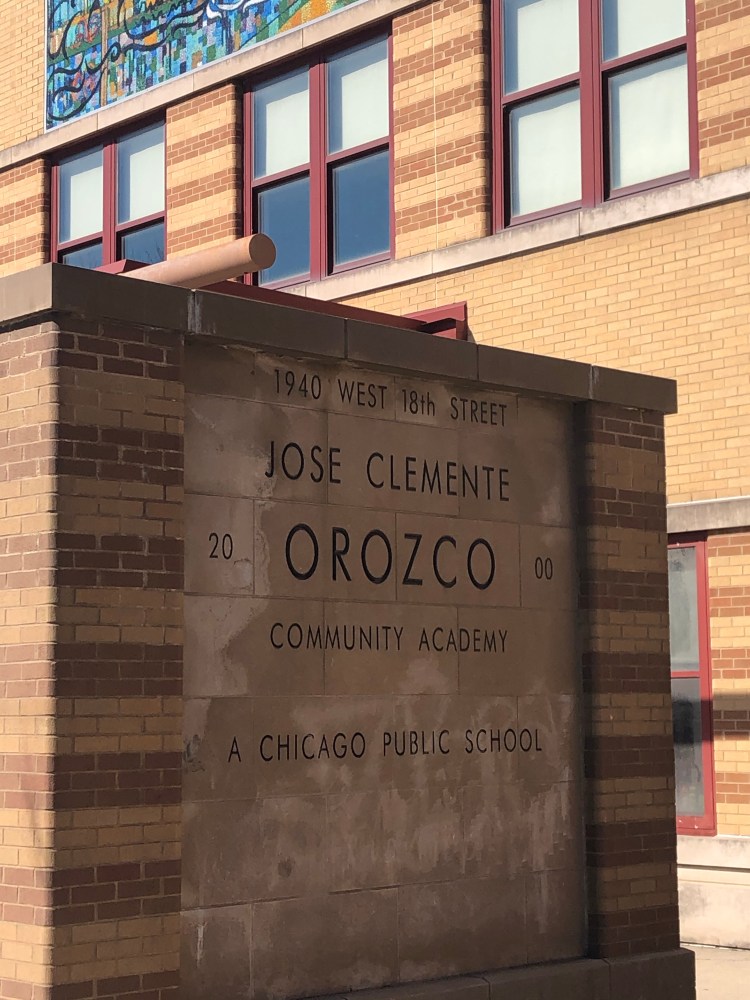
Orozco Community Academy 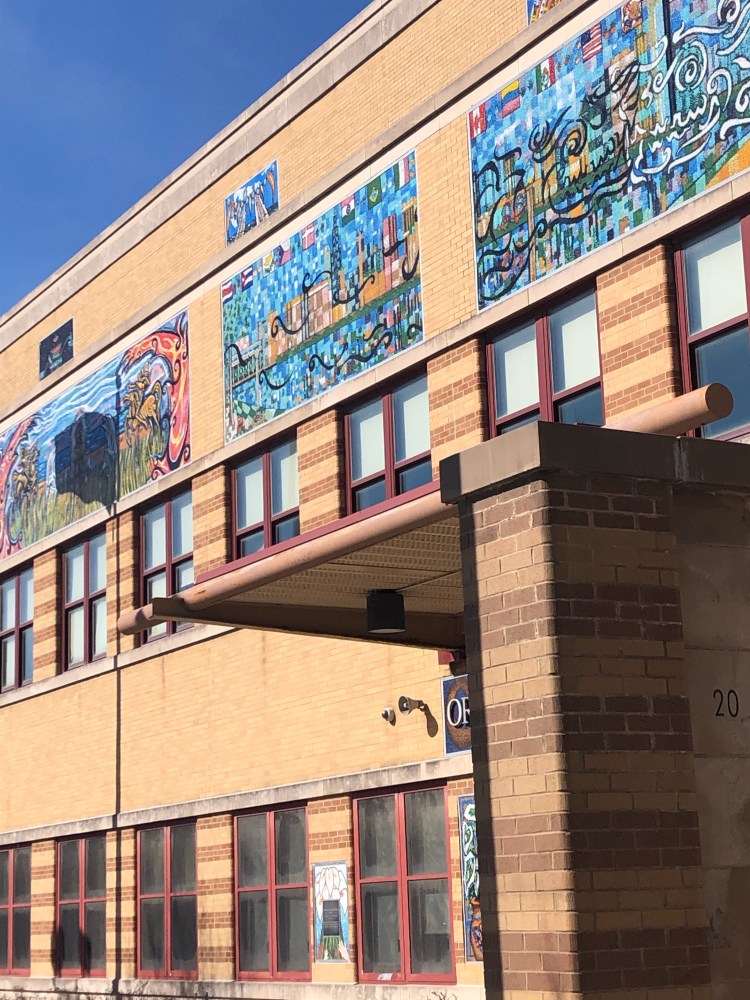
The mosaic murals on the wall of Orozco Community Academy were made by Francisco Mendoza. These murals represent Aztec icons, the neighborhood’s character and identity, the importance of education, and pay homage to Diego Rivera and Jose Clemente Orozco. The borders on some of these are lined with flags of different countries or children’s hands. Source 
In front of the school is an American Flag.
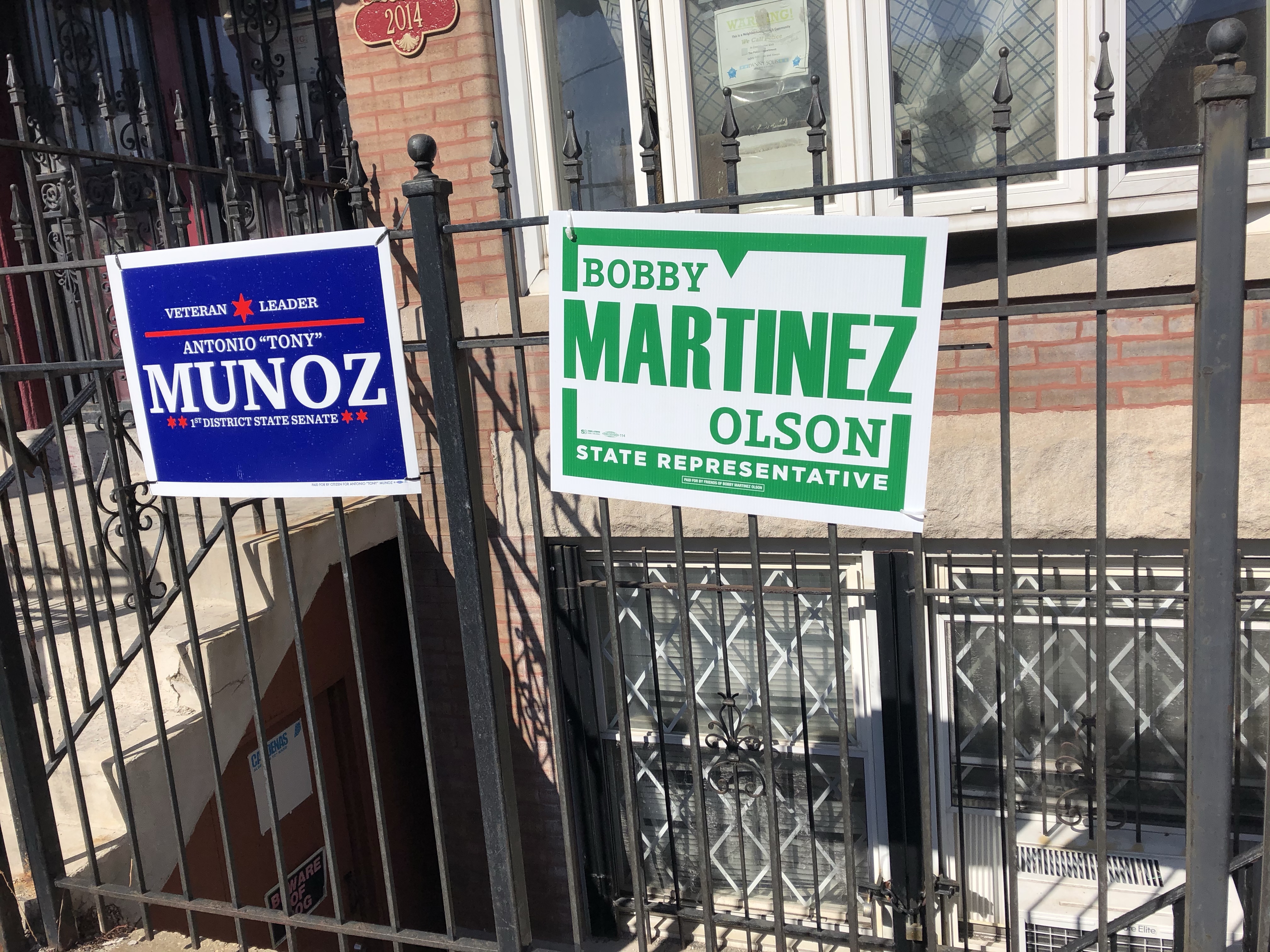
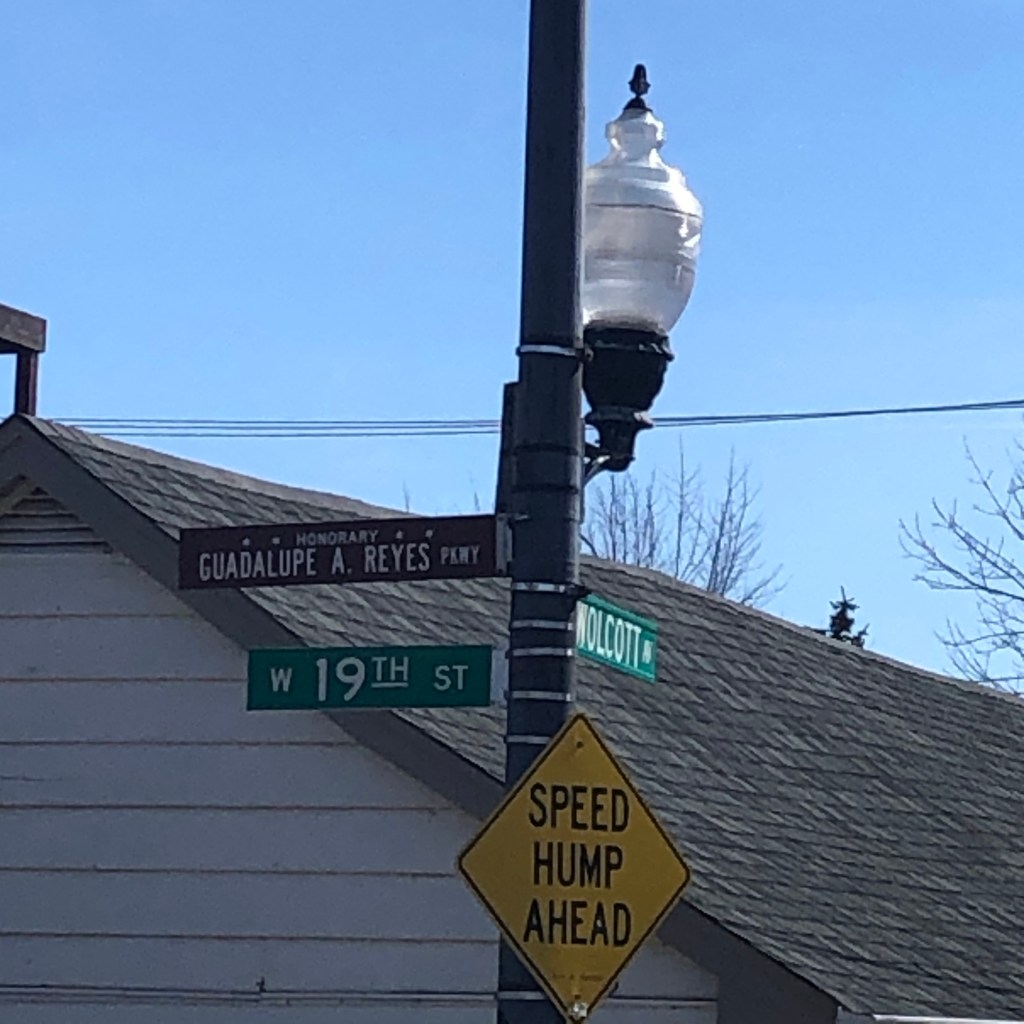
After seeing some of these murals, we walked down to 19th street and began heading East, going through more residential areas. As we walked, I noticed that many of the houses seemed to be raised a lot higher than the street and had stairs going up to the first floor. A lot of houses also had gates that were locked or closed. One house had a bike chained to the gate with the handlebars missing. Signs on their lawns, in their windows, or hung on their gates often advocated for certain candidates as senators or representatives, such as Tony Munoz and Bobby Martinez Olson. Many of the streets had two names, the Chicago street name and then the Pilsen “honorary” street name, instead of just one. This was interesting to me because I have seen something similar to this in Chinatown.
Further East on 19th street, we came across the National Museum of National Art, one of the most prominent institutions for Mexican art and culture in the US. With free admission being almost impossible to pass up, we went in to take a quick look, which soon turned into a long visit. The outside of the museum was completely untelling of the unimaginably mind-blowing exhibits on the inside. I was captivated by the art and took as many pictures as possible, some of which I have posted in a gallery below. The museum had three displays open when we went to visit. These were Woven: Connections and meanings, 40 Años a la Esperanza: Xicágo Gallery, and Nuestras Historias: Stories of Mexican Identity from the Permanent Collection.

The front of the building seems plain and untelling. 
This piece of art expresses Mexican individualism and shows the silhouette of a person comprised by lines and shapes.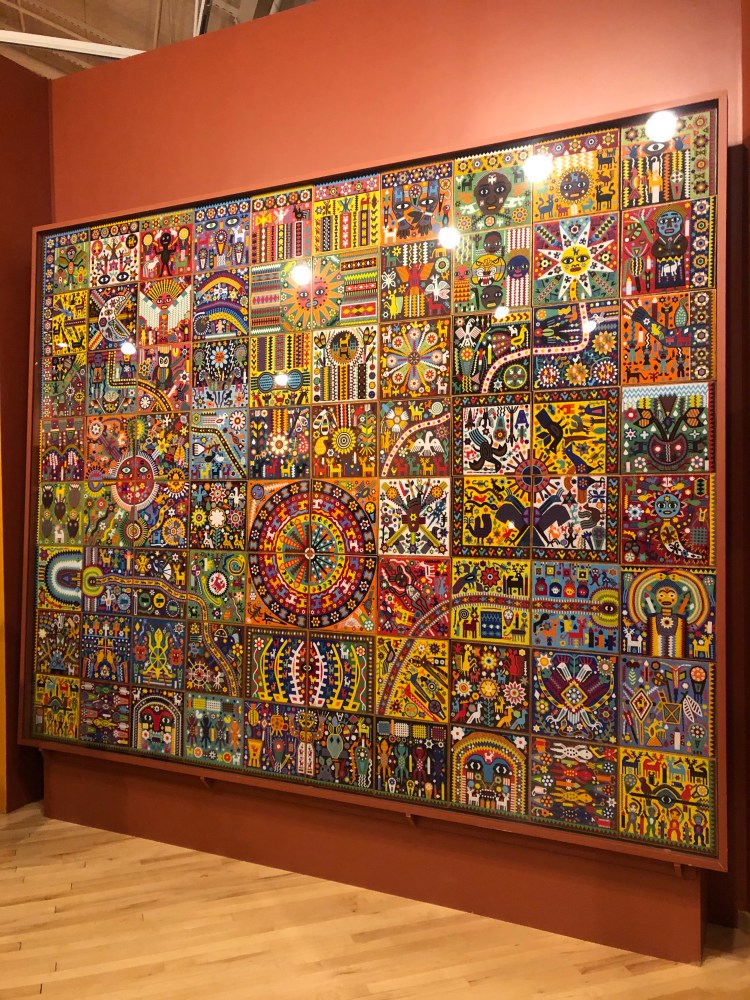
This piece of art is a beautiful mural composed by thousands of brightly colored beads that form intricate designs and patterns. 
This painting is of the Virgin of Guadalupe. It stands for the significance of religion in Mexican Culture. Many of the exhibits at the Museum incorporate religious aspects. 
These two pieces show more religious importance and depict three men in colorful robes surrounded by angels and Jesus dying on the cross. 
This exhibit was part of the Xicágo Gallery of Mexican Identity. This is a statue of Benito Juarez, a Mexican Hero to represent Mexican Immigrant Identity. 
This painting depicts a gruesome war and soldiers fighting for their lives. 
The sign above the doorway between two exhibits reads: Make Tacos Not War”. 
This exhibit is called the Garden of Earthly delights by Ruben Ortiz. It sets the scene of a beautiful happy summer and a lawnmower, showing yard labor as something leisurely and pleasurable.
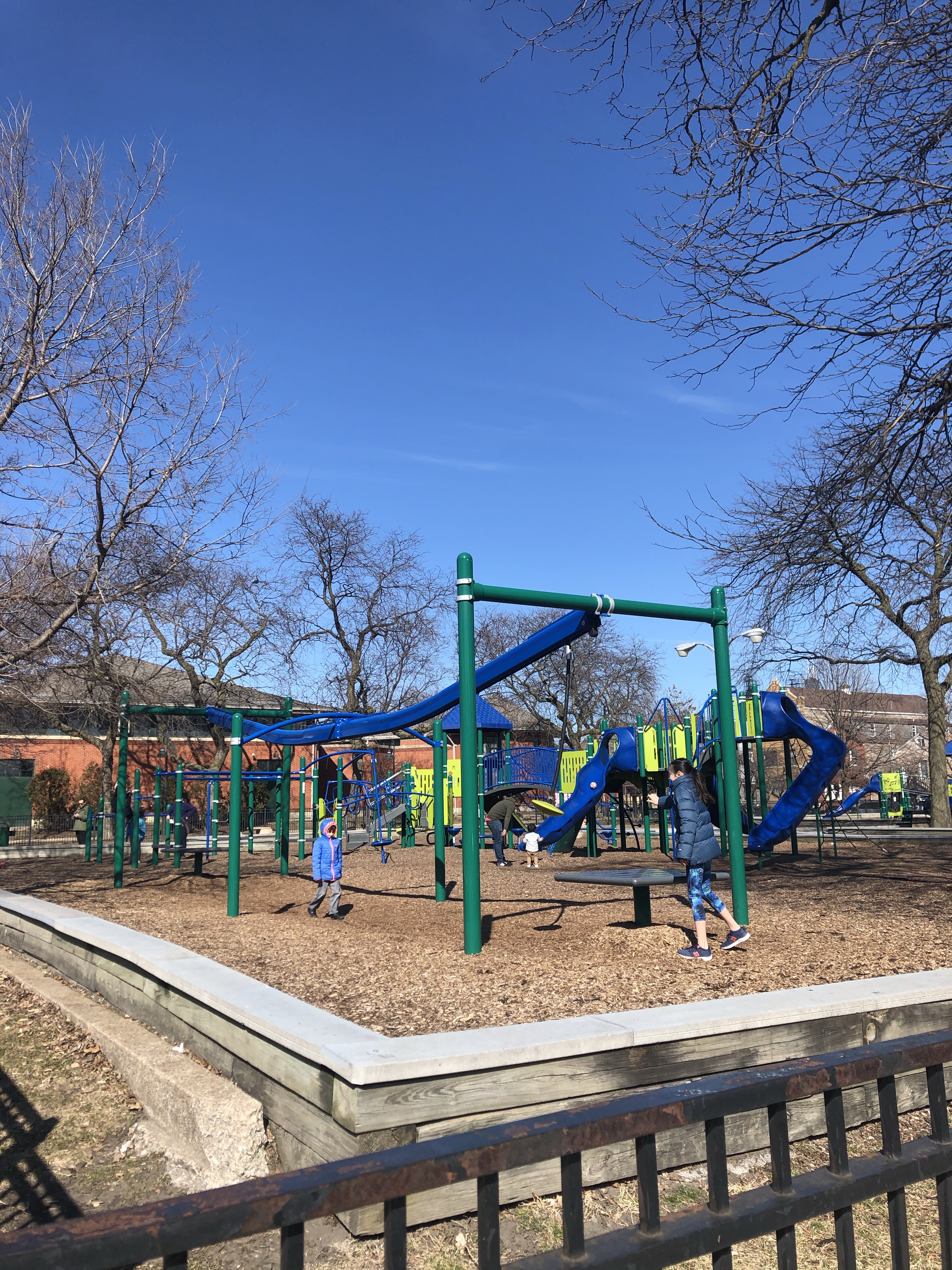
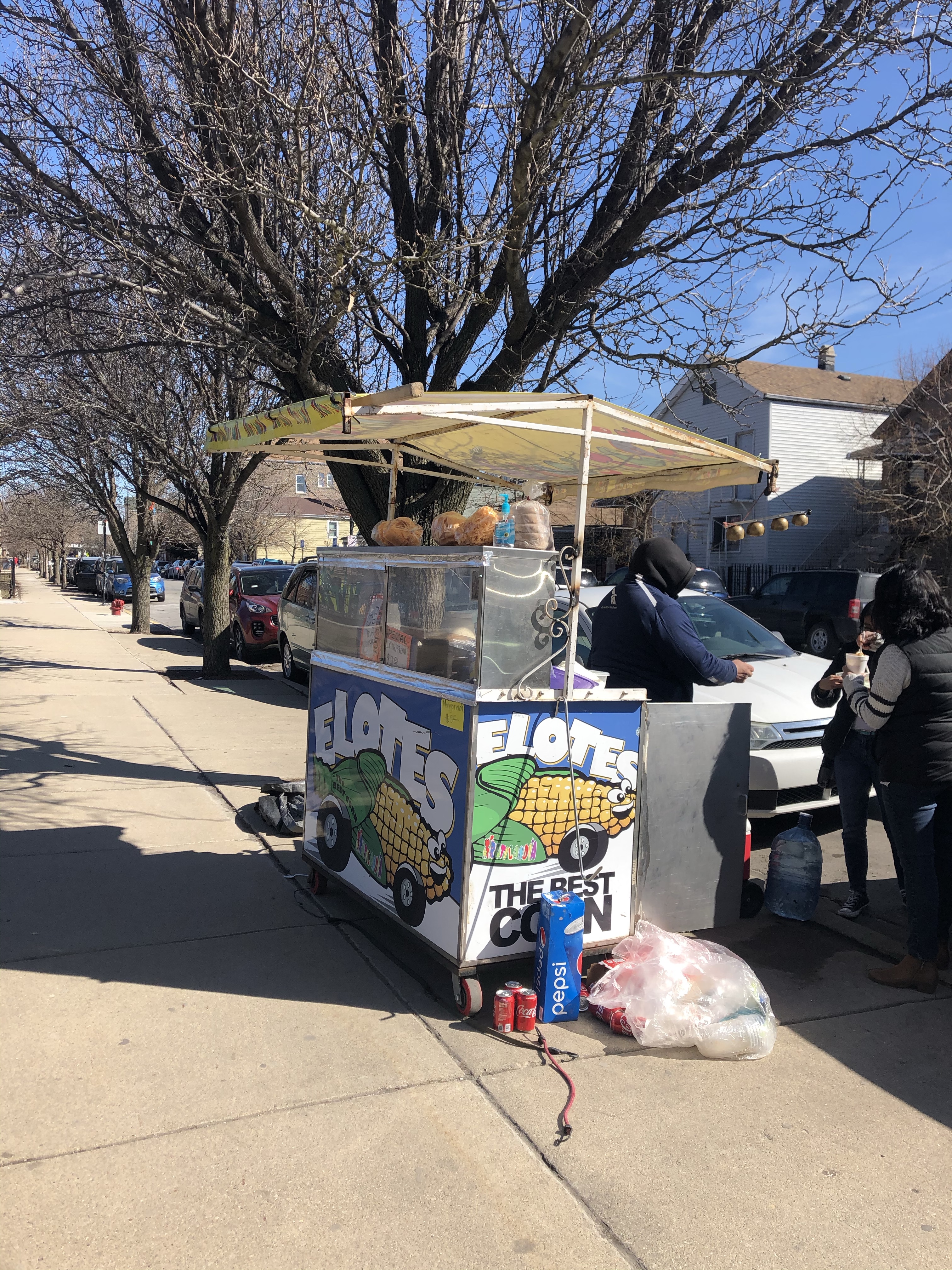
Finally, we began heading back to where we had parked. As we walked down 19th street I looked around at the neighborhood and after seeing so much of it, I was able to really appreciate what it adds to the city. On our way to the car, we passed by a playground and field called Harrison Park. The neighborhood was lively and comforting and the sound of children’s laughter filled the air. On the sidewalk next to the park, a street vender was selling Elotes and the smell was very refreshing. We continued walking until we reached the murals and the church that we had seen at the start of our journey. Taking one last look at the beautiful neighborhood, we got back in the car and headed to school. Though this trip may not have lasted more than a few hours, my memories of Pilsen will stick with me for a lifetime, and I am sure that I will come back to the neighborhood whenever I get the chance.
Sources:
“DEF PEACE PROJECT.” J, http://www.jdefpeaceproject.com/.
“The St. Pius V Parish Story.” St. Pius V Parish / La Parroquia De San Pío V, stpiusvparish.org/about-st-pius-v/history/.
“National Museum of Mexican Art.” National Museum of Mexican Art, 16 Aug. 2019, nationalmuseumofmexicanart.org/.
“Francisco J Merino.” Francisco Merino Obituary – Funeraria Del Angel Sagrado Corazon | Chicago IL, obits.dignitymemorial.com/dignity-memorial/obituary.aspx?n=Francisco-Merino&lc=2401&pid=160938453&mid=5300459.
Puente, Teresa. “The Pilsen Picasso: Francisco Mendoza, 1958-2012.” ChicagoNow, 2012, http://www.chicagonow.com/chicanisima-latino-politics-news-and-culture/2012/03/the-pilsen-picasso-francisco-mendoza-1958-2012/.
Sadovi, Carlos. “Alleged Gang Member Convicted in Girl’s Death That Jolted Pilsen.” Chicagotribune.com, 23 Aug. 2018, http://www.chicagotribune.com/news/ct-xpm-2006-11-16-0611160203-story.html.
“Police Officer Brian Timothy Strouse.” The Officer Down Memorial Page (ODMP), 17 Jan. 2019, http://www.odmp.org/officer/15723-police-officer-brian-timothy-strouse.
 Global Chicago